

The FDA has issued a complete response letter to Sesen Bio regarding its biologics license application for Vicineum (oportuzumab monatox-qqrs) for the treatment of patients with BCG-unresponsive non-muscle invasive bladder cancer.
The FDA has issued a complete response letter to Sesen Bio regarding its biologics license application for Vicineum (oportuzumab monatox-qqrs) for the treatment of patients with BCG-unresponsive non-muscle invasive bladder cancer.
The FDA has approved belzutifan (Welireg) for adult patients with von Hippel-Lindau disease who require therapy for associated renal cell carcinoma.
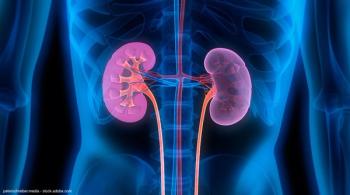
In the pivotal phase 3 DAPA-CKD trial, dapagliflozin reduced the relative risk of worsening of renal function, onset of end-stage kidney disease, or cardiovascular or renal death by 39%.

The pivotal phase 3 SPLASH study is exploring the novel PSMA-targeted therapy PNT2002 in patients with metastatic castration-resistant prostate cancer.

The FDA’s decision not to approve roxadustat follows a vote from the agency’s Cardiovascular and Renal Drugs Advisory Committee that the drug’s benefit-risk profile does not support approval.

Inhibiting the HDL cholesterol receptor SCARB1 can kill and stop the proliferation of clear cell renal cell carcinoma cells.

Ribociclib was explored in combination with docetaxel and prednisone in patients with metastatic castration-resistant prostate cancer.
Patient tumors must express PSMA as identified by 68Ga-PSMA-11 or 18F-DCFPyl PSMA PET/CT scanning.

The benefit was more pronounced in patients who received only 1 treatment—enzalutamide or abiraterone—and no docetaxel.

Decipher Prostate Biopsy, a 22-gene microarray-based genomic classifier, showed potential as a tool to help guide decisions between active surveillance and radical treatment in men with localized prostate cancer.

The FDA has issued a complete response letter regarding a new drug application for tenapanor for the control of serum phosphorus in adult patients with chronic kidney disease on dialysis.
The FDA approved lumasiran in November 2020 as the first drug for the treatment of patients with primary hyperoxaluria type 1.

The survival benefit in patients with PD-L1–negative tumors mirrored the benefit in the overall study population.

The theranostic 64/67Cu SAR-bisPSMA combines the PSMA PET imaging product 64Cu-SAR-bisPSMA and the PSMA targeted therapy 67Cu-SAR-bisPSMA.

The ADXBLADDER urinary biomarker test is being explored as a tool to assist in the monitoring of cancer recurrence in patients with non-muscle invasive bladder cancer.
Researchers from the FDA’s Center for Drug Evaluation and Research determined that the benefits of androgen receptor inhibitors outweighed the risks in men aged ≥80 years with nonmetastatic castration-resistant prostate cancer.

Receiving Nesbit’s surgical procedure for Peyronie’s disease does not result in deterioration of erectile function.
The noninvasive UriFind test identifies bladder cancer based on methylation detection of exfoliated cell DNA in urine.

“Clinicians should considerer these data when prescribing 5-ARIs to patients,” said Dr. Antonio Franco.
Prostate cancer screening with MRI-guided biopsy reduced the detection of clinically insignificant prostate cancer versus use of standard biopsy alone, while also demonstrating noninferiority for detecting clinically significant disease.
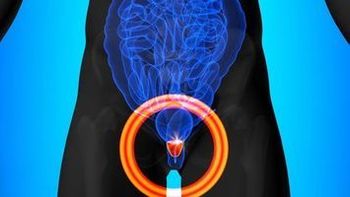
“This is a completely new therapeutic concept; a precision medicine that delivers radiation directly to a high incidence tumor," said Ken Herrmann, MD.

Photodynamic diagnosis with blue light was associated with improved outcomes compared to white light cystoscopy in patients with bladder cancer who received TURBT.

With supporting data from larger series, using Ga-68 PSMA PET as a lymph node invasion prediction tool instead of nomograms could avoid unnecessary lymphadenectomies during radical prostatectomy,” said Yakup Kordan, MD.
The so-called “obesity paradox” previously reported in other genitourinary malignancies has now been observed in patients with metastatic castration-resistant prostate cancer.
“This confirms the potential of PSMA PET to distinguish between risk groups for MFS,” said Dr. Christoph Würnschimmel.
The approval is based on findings from the EV-301 and EV-201 trials.

“Treatment was associated with manageable adverse events, which did not compromise surgical resection,” said lead study author Samuel A. Funt, MD.

The pivotal OASIS trial is examining the capability of the RENOVA iStim tibial neuromodulation system to reduce urinary urgency incontinence episodes in women.
Neoadjuvant stereotactic ablative radiation followed by radical nephrectomy and thrombectomy was safe and showed signs of positive clinical activity in patients with renal cell carcinoma and inferior vena cava tumor thrombus.
The 2021 ASCO Annual meeting has come and gone, with its annual release of thousands of abstracts across every tumor type. Here are the key genitourinary cancer highlights for the practicing urologist.