





Prostate Cancer
Latest News

Study finds commercial prices for prostatectomies are not associated with treatment patterns
By Janelle Hart
Advertisement
Latest Videos





CME Content







Advertisement
More News

The results also showed a trend toward improved overall survival with the combination of the PARP inhibitor and novel hormonal agent; however, the data remain immature.

Paige Prostate AI-based software provides pathologists with a supplementary assessment of prostate biopsy images that identifies the area with the highest likelihood of harboring cancer.

“We need to do a better job sampling the prostate,” says Matthew J. Allaway, MD.

The guideline update is supported by findings from the pivotal RTOG 96-01 trial.

Setting expectations and minimizing ports and drains are among steps to take.

In this interview, urologist Matthew J. Allaway, MD, gives an overview of transrectal vs transperineal biopsies, discusses how his own cancer battle influenced his professional path, and how his PrecisionPoint system aids in the detection of prostate cancer.

Michael S. Cookson, MD, previews the 2021 AUA Annual Meeting, with a focus on prostate, bladder, and kidney cancer. His in-depth analysis covers the plenary sessions, late-breaking abstracts, and other abstracts of interest.
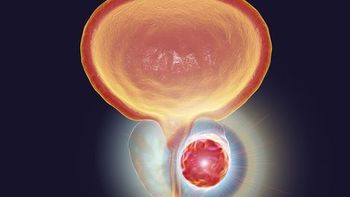
“When a man initially presents with metastatic disease, or fails initial systemic therapy, our approach has to be different. We are more concerned that their disease is more aggressive,” says Leonard Gomella, MD.

“Through these 2 small punctures, we can manipulate the device with the methodology to sample the entire prostate, both anterior apical and the posterior regions, where we find the vast majority of our cancers,” says Matthew A. Allaway, MD.
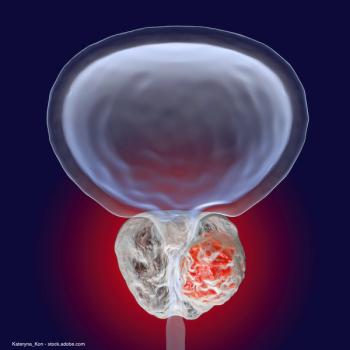
“The transperineal [prostate biopsy] approach is safer because the needles are passed through the perineal skin…so, we can sterilize that skin and if we enter through that passageway, we mitigate, if not eliminate, the risk of infection and sepsis,” says Matthew J. Allaway, MD.
“The 3 major barriers we face [are] training, equipment, and reimbursement,” says Matthew A. Allaway, MD.

“These results may help guide policy making, developing quality indicators, and developing targeted continued education for physician and patients embarking on active surveillance to establish realistic expectations,” said Antonio Finelli, MD.
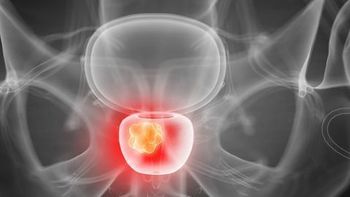
Using stereotactic body radiotherapy to reduce the number of treatment sessions with fewer, more intense doses did not lead to an increase in gastrointestinal or genitourinary acute toxicity.

The FDA approved the ready-to-use 6-month subcutaneous depot formulation of leuprolide mesylate earlier this year for the treatment of patients with advanced prostate cancer.

Risk factors Dr.Zhang highlights include site of metastases, PSA response, and metastases burden.

“The MRI/ultrasound-guided transperineal approach allows easy access to anterior prostate tumors,” says Marc A. Bjurlin, DO, MSc, FACOS, in this video.

"The major shift for many urologists over the past 10 years has undoubtedly been the understanding of how to treat advanced prostate cancer," writes Raoul S. Concepcion, MD, FACS.

“New and different drugs indicated at different points in the treatment cycle have been the biggest change," says 1 urologist.

In this interview, Marc A. Bjurlin, DO, MSc, FACOS, explains the advantages of prostate MRI, in which patients it is best used, and whether it can be considered the gold standard for prostate cancer detection
Daniel C. Danila, MD, discusses choosing among the androgen receptor inhibitors darolutamide, enzalutamide, and apalutamide when treating patients with castration-resistant prostate cancer.
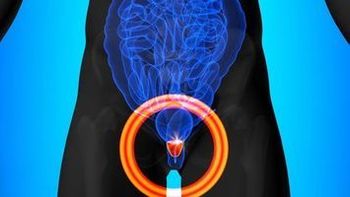
Results from the phase 2 TALAPRO-1 study published in the Lancet Oncology show favorable antitumor activity with talazoparib in heavily pretreated patients with metastatic castration-resistant prostate cancer and DDR-HRR gene alterations.

Ventana MMR RxDx Panel is a qualitative immunohistochemistry test that assesses a panel of MMR proteins to help guide clinicians in their treatment decisions.

Combining the Stockholm3 blood test with MRI-guided prostate biopsy reduced the number of MRIs performed and lowered overdetection, while not sacrificing the capacity to identify clinically significant tumors, according to findings from the STHLM3-MRI study.

Jingsong Zhang, MD, PhD, discusses how the site of metastases impacts his approach to treatment selection for patients with metastatic castration-resistant prostate cancer.
“It is always important to think about how the imaging and the way we read the imaging can improve, right and be used in a way that makes the most sense for the decision at hand,” says Stella K. Kang, MD, in this podcast.
Advertisement
Advertisement
Trending on Urology Times
1
Clinical Application of MMAI Score in Patients with Prostate Cancer
2
FDA approves capivasertib plus abiraterone and prednisone for PTEN-deficient mHSPC
3
FDA approves adjuvant belzutifan with pembrolizumab for ccRCC
4
Kevin Zorn, MD, on selecting among different MIST options for BPH
5