

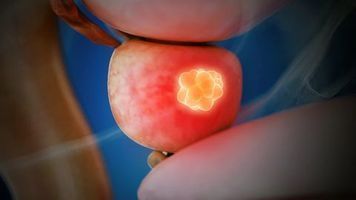


Prostate Cancer
Latest News

January 18th 2022
Combination ADT and radiation therapy shows favorable outcomes in men with localized prostate cancer
By Janelle Hart
“Our team showed that treating a group of approximately 10 to 15 men with hormone therapy or extended adjuvant hormone therapy, for at least 18 months, prevented one man from developing metastatic disease 10 years after treatment," says Daniel E. Spratt, MD.
Advertisement
Latest Videos




CME Content

Advertisement
More News
“It doesn't need to be surgery or radiation. Setting that stage, really focusing on those conversations, using the appropriate tools that we've grasped from behavioral psychologists that are being used by negotiation specialists, are critical in medicine,” says Behfar Ehdaie, MD, MPH.

Study suggests radiotherapy response is better among Black men versus White men with prostate cancer
The improved response to radiotherapy was observed despite Black men having more aggressive disease at enrollment.

“We’ll be able to take a drop of blood in a community setting such as a barbershop and be able to deliver results in 10 to 15 minutes right there,” says investigator Saurabh Mehta, ScD.

“I think in specialized cases, especially for patients [who] need focal therapy or want focal therapy, or [for whom] you're really trying to minimize any nerve damage or urethral damage…these are excellent therapies,” says Jennifer Linehan, MD.

"There are many aspects of urology that get equal attention. Cancer will always attract attention and dollars, but it’s trickier to solve," says 1 urologist.

William J. Catalona, MD, explains how prostate-specific antigen (PSA) testing revolutionized screening and treatment of prostate cancer.

"The fact that it was a simple blood test, it was absolutely objective, and it was…non-invasive…made it very attractive," says William J. Catalona, MD.
“You can be 2 to 3 mm from another organ and still safely treat the tissue that you want to,” says Jennifer Linehan, MD.

Badar M. Mian, MD, FACS, discusses advantages and limitations of transperineal prostate biopsy and highlights ongoing research with this newer modality.

In this interview, Kelvin A. Moses, MD, PhD, FACS, provides insight on how clinicians may be able to help patients with prostate cancer address the financial burden of the disease.

"As we celebrate the tremendous victories against cancer and commemorate 5 decades of progress, we are also reminded of the harsh reality that we have a war still to be won," writes Michael S. Cookson, MD, MMHC, co–editor in chief of Urology Times.

“We find that consuming more healthy, plant-based foods is associated with a lower risk of aggressive and lethal prostate cancer, and has many other health benefits, too,” says Stacy Loeb, MD, PhD, MSc.

At the 2021 SUO Annual Meeting, Andrew J. Armstrong, MD, MSc, presented promising findings from the study, “The efficacy of enzalutamide (Enza) plus androgen deprivation therapy (ADT) on oligometastatic hormone-sensitive prostate cancer: extended post hoc analysis of ARCHES.”

Marijo Bilusic, MD, PhD, discusses research with the diabetes drug metformin in patients with prostate cancer.

After the initial revolutionary breakthrough of sipuleucel-T (Provenge), the immunotherapy experience in prostate cancer has been challenging.
“Seeing the social media chatter, I think there is tremendous support for walking this back,” says Alexander Kutikov, MD, FACS.

Isla Garraway, MD, PhD, discusses the potential for expanding the range of men with early prostate cancer who can receive active surveillance.
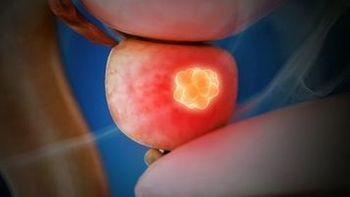
“Men who experience biochemical recurrence after radical prostatectomy or radiation therapy should undergo PET scanning so that they can have specific targeted treatments administered to the site or sites of recurrence rather than [be treated] using the historical type of clinical parameters that we used in the past,” says Gerald L. Andriole, MD.
Jason M. Hafron, MD, CMO, and Oliver Sartor, MD, share their approach for the optimal management of mCRPC through genetic testing.

Daniel P. Petrylak, MD, leads the discussion on sequencing treatment for a patient with mCRPC, such as in case 2, who progresses on docetaxel therapy.
Vivek K. Narayan, MD, MS, provides insight on the evolution of care for mCSPC and the current use of ARI-directed therapy for disease management.

Experts in prostate cancer comment on the role of urologists in performing molecular testing and share how they facilitate treatment of advanced prostate cancer across multiple disciplines.

Phase 2 data shared at the 2021 AUA Annual Meeting showed the efficacy of Exablate magnetic resonance–guided focused ultrasound in men with intermediate-risk prostate cancer.
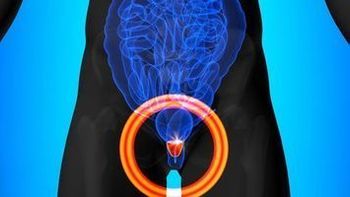
Adding darolutamide to docetaxel and androgen deprivation therapy significantly improved overall survival in men with metastatic hormone-sensitive prostate cancer.

Prostate cancer experts review the use of PSMA PET/CT imaging and Axumin imaging for patients with metastatic castration-resistant prostate cancer.
Advertisement
Advertisement
Trending on Urology Times
1
FDA approves sildenafil oral film for men with erectile dysfunction
2
The UroOnc Minute: Adjuvant Therapy in Renal Cell Carcinoma, with Brian Shuch, MD
3
Head-to-head analysis shows OS benefit with apalutamide vs darolutamide in mCSPC
4
Phase 1/2 trial launches of molecular glue degrader for ccRCC
5