




Prostate Cancer
Latest News

With all the attention paid to prostate cancer research and treatment, do other aspects of urology get the research they need?
By Karen Nash
Advertisement
Latest Videos





CME Content







Advertisement
More News

“You can be 2 to 3 mm from another organ and still safely treat the tissue that you want to,” says Jennifer Linehan, MD.

Badar M. Mian, MD, FACS, discusses advantages and limitations of transperineal prostate biopsy and highlights ongoing research with this newer modality.

In this interview, Kelvin A. Moses, MD, PhD, FACS, provides insight on how clinicians may be able to help patients with prostate cancer address the financial burden of the disease.

"As we celebrate the tremendous victories against cancer and commemorate 5 decades of progress, we are also reminded of the harsh reality that we have a war still to be won," writes Michael S. Cookson, MD, MMHC, co–editor in chief of Urology Times.

“We find that consuming more healthy, plant-based foods is associated with a lower risk of aggressive and lethal prostate cancer, and has many other health benefits, too,” says Stacy Loeb, MD, PhD, MSc.

At the 2021 SUO Annual Meeting, Andrew J. Armstrong, MD, MSc, presented promising findings from the study, “The efficacy of enzalutamide (Enza) plus androgen deprivation therapy (ADT) on oligometastatic hormone-sensitive prostate cancer: extended post hoc analysis of ARCHES.”

Marijo Bilusic, MD, PhD, discusses research with the diabetes drug metformin in patients with prostate cancer.

After the initial revolutionary breakthrough of sipuleucel-T (Provenge), the immunotherapy experience in prostate cancer has been challenging.
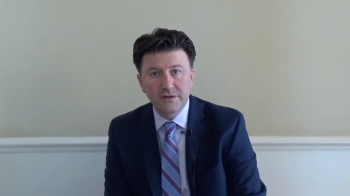
“Seeing the social media chatter, I think there is tremendous support for walking this back,” says Alexander Kutikov, MD, FACS.

Isla Garraway, MD, PhD, discusses the potential for expanding the range of men with early prostate cancer who can receive active surveillance.
“Men who experience biochemical recurrence after radical prostatectomy or radiation therapy should undergo PET scanning so that they can have specific targeted treatments administered to the site or sites of recurrence rather than [be treated] using the historical type of clinical parameters that we used in the past,” says Gerald L. Andriole, MD.
Jason M. Hafron, MD, CMO, and Oliver Sartor, MD, share their approach for the optimal management of mCRPC through genetic testing.

Daniel P. Petrylak, MD, leads the discussion on sequencing treatment for a patient with mCRPC, such as in case 2, who progresses on docetaxel therapy.

Vivek K. Narayan, MD, MS, provides insight on the evolution of care for mCSPC and the current use of ARI-directed therapy for disease management.

Experts in prostate cancer comment on the role of urologists in performing molecular testing and share how they facilitate treatment of advanced prostate cancer across multiple disciplines.

Phase 2 data shared at the 2021 AUA Annual Meeting showed the efficacy of Exablate magnetic resonance–guided focused ultrasound in men with intermediate-risk prostate cancer.
Adding darolutamide to docetaxel and androgen deprivation therapy significantly improved overall survival in men with metastatic hormone-sensitive prostate cancer.

Prostate cancer experts review the use of PSMA PET/CT imaging and Axumin imaging for patients with metastatic castration-resistant prostate cancer.

Raoul S. Concepcion, MD, presents the case of a 64-year-old-man with mCRPC, and Jason M. Hafron, MD, CMO, leads the discussion on the optimal treatment approach for the given case.

Ashley E. Ross, MD, PhD, leads the discussion on risk stratification in advanced prostate cancer and approaching prostate cancer screening.

Bobby Liaw, MD; Neal Shore, MD, FACS; and Vivek K. Narayan, MD, MS, discuss the incidence and prevalence of advanced prostate cancer, including mCSPC and nmCRPC.

“I would say what RTOG-0815 has provided is data to have an intelligent conversation with our patients and provide them numbers so that they know what to expect,” says Bridget F. Koontz, MD.

"The explosion in the number of therapies in this particular disease segment, especially those that have been deemed BCG unresponsive, seems very reminiscent to that witnessed in the mCRPC space a decade ago," writes Raoul S. Concepcion, MD, FACS.
Daniel P. Petrylak, MD, leads the discussion on approaching treatment of high-volume metastatic castration-naïve prostate cancer.
A panel of experts in prostate cancer examine the use of conventional imaging and PSMA PET/CT and the impact on their approach to the management of mCNPC.
Advertisement
Advertisement
Trending on Urology Times
1
Clinical Application of MMAI Score in Patients with Prostate Cancer
2
FDA approves capivasertib plus abiraterone and prednisone for PTEN-deficient mHSPC
3
FDA approves adjuvant belzutifan with pembrolizumab for ccRCC
4
Kevin Zorn, MD, on selecting among different MIST options for BPH
5