
ORR was 70% (95% CI, 55-82) in cohort 1 compared with 31% (95% CI, 19-45) in cohort 2.
ORR was 70% (95% CI, 55-82) in cohort 1 compared with 31% (95% CI, 19-45) in cohort 2.

“These data reinforce enfortumab vedotin and pembrolizumab as the new standard of care in frontline urothelial cancer," says Thomas Powles, MD, PhD.
"I think this is the next step for testing the clinical activity of this agent," says David A. Braun, MD, PhD.

The pCR was 37.3% (95% CI, 33.2-41.6) in the durvalumab arm and 27.5% (95% CI, 23.8-31.6) in the comparator arm.

OS was found to be prolonged with avelumab plus BSC vs BSC alone regardless of diabetes mellitus status.
"We see that among the patients who went on to receiving cystectomy, 84% are metastases free," says Pooja Ghatalia, MD.

The investigators reported that there were 24 evaluable patients with CIS with/without papillary disease, of whom 79% had a CR at 3 months.
"The efficacy findings reported to date are 71% any time response," says John A. Taylor III, MD, MS.

A total of 37 studies included real-world OS as an outcome; in these studies, median real-world OS ranged from 9 months to 23.5 months.

"Efficacy outcomes with darolutamide plus ADT were improved vs placebo plus ADT regardless of disease volume," said Fred Saad, MD, FRCS.

The median number of re-injections was 6 (range, 1-12).
“Both groups benefited, but it would look like earlier is better if we can treat patients with low-volume disease,” says Fred Saad, MD, FRCS
“Of the 3 adrenal androgens, it's DHEA that seems to be most indicative of overall survival,” says Nima Sharifi, MD.

"Patients with metastatic hormone-sensitive prostate cancer benefited from treatment with darolutamide plus ADT and docetaxel regardless of age," said Joan Carles, MD, PhD.

In both racial cohorts, median MFS was not reached in the darolutamide group.
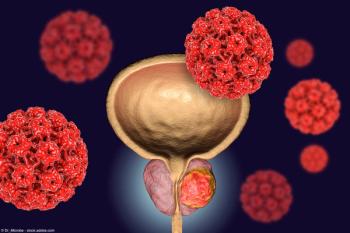
“Looking at our overall results, not surprisingly, we can show a clear benefit of ARPIs on overall survival," says David Fisher, MSc, MA.

The investigators reported an HR for OS of 0.796 (95% CI, 0.661-0.958; 2-sided P = .0155) for talazoparib/enzalutamide vs enzalutamide/placebo.
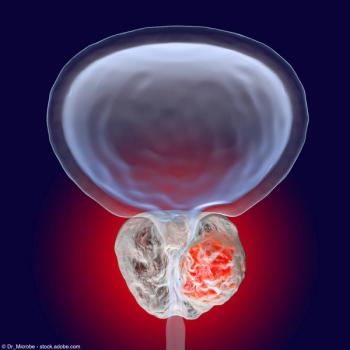
The treatment combination was associated with median radiographic progression-free survival of 14.3 months vs 6.2 months with enzalutamide alone.
“At this time, we should offer similar treatment to both African American and Caucasian patients,” says Jasmeet Kaur, MD.
“The response rate now with the updated dataset has gone up to just about 50% across the cohort,” says Martin H. Voss, MD.
"We could have had our expansion doses [at] 40 mg, but we made the clinical decision to go with 20 mg in expansion based on a hope for future clinical tolerability and longevity," says Jacqueline T. Brown, MD.

“The co-primary end points are safety and overall response rate as measured via RESIST v1.1,” says Jonathan A. Chatzkel, MD.

“Combination therapy with lenvatinib plus pembrolizumab provides a comparable OS, and a trend of improvement in PFS and response outcomes, compared with most current global SOC therapies for treatment-naïve patients with advanced renal cell carcinoma,” the study authors wrote.

Data revealed that 49% of prostate cancer signups in clinical trials were among patients newly diagnosed with cancer, compared with 32% among patients with other solid tumors.

“Medical oncologists, including academic and in the community, tend to order more genomic testing than urologic oncologists,” says Dalia Kaakour, MD, MS, MPH.
"I think it's very interesting to see that we continue to see a survival benefit at 55-months follow-up," says Maria Teresa Bourlon, MD, MSc, MS.
“It's important to note as well that the kidney cancer biology is really distinct from a lot of other solid tumors, and particularly other immunotherapy response to solid tumors,” says David A. Braun, MD, PhD.
“If you put everything together, the cabo/atezo combination statistically significantly improved the progression-free survival and reduced the risk of progression or death by 35% in a patient population with very poor prognosis,” says Neeraj Agarwal, MD, FACSO.
“Our study provides real-world recurrence and survival rates, [however], a major limitation is the retrospective nature of the analysis,” wrote the investigators, led by Viktor Gruenwald, MD, PhD.

“This will become a very attractive option if approved by the FDA because the treatment burden on patients will be significantly reduced, thus making it easier for patients to access it,” says Saby George, MD, FACP.