

GU Cancers Symposium

Immunotherapy with or without radiotherapy did not demonstrate significant efficacy in patients with advanced squamous cell carcinoma of the penis, according to findings from the phase 2 PERICLES trial.
Advertisement

“These are consistent results that continue to demonstrate a disease-free survival benefit of pembrolizumab adjuvant versus placebo,” says Toni K. Choueiri, MD.
The investigators concluded that time to event end points and response rates were similar regardless of which first-line immunotherapy was administered.

“I do think that this helps inform how to choose an agent for this specific stage of the disease,” says Benjamin Lowentritt, MD, FACS.
A recent study suggests that patients with adrenocortical carcinoma at low-intermediate risk of recurrence do not derive significant benefit from postoperative adjuvant mitotane treatment.
Advertisement

“I think that this updated analysis of KEYNOTE-564 further supports adjuvant pembrolizumab as a new standard of care for patients with RCC with high risk of recurrence,” said Toni K. Choueiri, MD.
The combination of the PD-L1 inhibitor avelumab and the tyrosine kinase inhibitor axitinib showed promise as a neoadjuvant therapy for patients with high-risk, non-metastatic clear-cell renal cell carcinoma, according to findings from the NeoAvAx trial.
First-line tivozanib in patients with metastatic renal cell carcinoma was reported to be safe, tolerable, and capable of producing similar clinical activity as other tyrosine kinase inhibitors used in this setting.
The final overall survival analysis from the phase 3 CheckMate 9ER trial continued to show a benefit with frontline nivolumab/cabozantinib versus sunitinib in patients with advanced renal cell carcinoma.

Lead study author Chung-Han Lee, MD, PhD, said that while the findings were “disappointing from a biomarker development standpoint,” the results confirm the effectiveness of the regimen across various lines of treatment.
An analysis of the phase 2 TITAN-RCC trial found multiple immune cell factors associated with high rates of response to nivolumab/ipilimumab in advanced renal cell carcinoma.
Neoadjuvant cabozantinib was safe and induced a reduction in tumor size in all patients with locally advanced nonmetastatic clear cell renal cell carcinoma enrolled in a phase 2 trial.

“I think, in general, patients with hereditary upper tract cancer may be under-recognized and under-referred for genetic evaluation,” says Hong Truong, MD.

The combo of the PARP inhibitor niraparib and the multikinase inhibitor cabozantinib showed positive early efficacy and safety signals in patients with metastatic urothelial carcinoma or renal cell carcinoma.

BAYOU trial results showed no significant PFS boost in all-comer population with addition of olaparib to frontline durvalumab in metastatic urothelial carcinoma, but potential benefit for combo was observed in HRR-mutation–positive subgroup.

“This first disclosure of data supports the ongoing phase 2 and 3 programs evaluating enfor-tumab vedotin alone or in combination with pembrolizumab in MIBC,” said Daniel P. Petrylak, MD.

“These data support further evaluation of antibody-drug conjugate/checkpoint inhibitor combination [therapy] in metastatic urothelial cancer in the platinum-refractory setting and probably in earlier lines of therapy in a different patient population,” says Petros Grivas, MD, PhD.

Long-term data from the phase 3 JAVELIN Bladder 100 trial continued to show an overall survival (OS) boost with frontline avelumab maintenance in patients with metastatic urothelial cancer.

The authors aimed to show that the positive safety/tolerability profile for darolutamide established in nonmetastatic patients also extended to the metastatic setting.
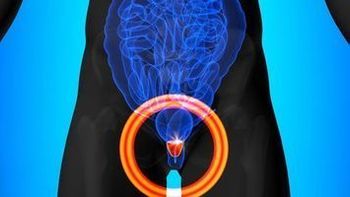
The phase 3 PROpel trial showed that adding the PARP inhibitor olaparib to abiraterone acetate in the frontline setting significantly improved radiographic progression-free survival versus placebo plus abiraterone in patients with metastatic castration-resistant prostate cancer.

“There’s excellent image quality,” said David M. Schuster, MD, “and also the potential for low urinary secretion, which, as we know, is important for imaging prostate cancer.”
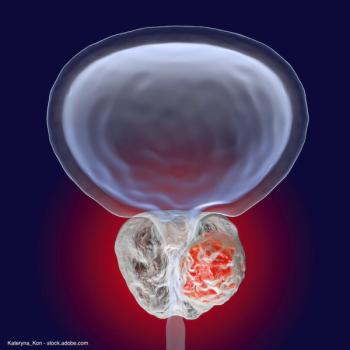
“Darolutamide improved overall survival despite a high rate of subsequent life prolonging systemic therapies in the placebo group,” said Matthew R. Smith, MD, PhD, lead author of the phase 3 ARASENS trial.
The phase 3b PRESIDE trial showed that continuing enzalutamide in combination with docetaxel and prednisolone delayed disease progression in patients with metastatic castration-resistant prostate cancer who progressed on enzalutamide alone.

“Not only does a deep PSA response identify patients who will have improved survival and progression-free outcomes, but also it is also associated with maintenance of health-related quality of life, improved patient reported physical wellbeing, and a reduced risk of worsening pain and fatigue intensity,” said Eric Jay Small, MD.

Patients treated with apalutamide achieved a PSA90 response at a 70.4% rate compared with 62.5% of patients who received enzalutamide at the end of the 12-month follow-up.
Findings from the phase 3 MAGNITUDE trial showed that adding niraparib to abiraterone acetate significantly extended radiographic progression-free survival in patients with metastatic castration-resistant prostate cancer and homologous recombination repair gene alterations.

“I think what we're showing here is that the overall survival benefit, as well as the safety analysis, regardless of the number of comorbidities, was rather significant,” said study coauthor Neal D. Shore, MD.

“[These favorable findings just speak] to the complexity of the health index for these patients,” says Neal D. Shore, MD, FACS.

“It's the first time that any gene expression test has been analyzed in a randomized trial, even if it's post-hoc, in intermediate-risk patients,” says Daniel E. Spratt, MD.
Advertisement
Advertisement
Trending on Urology Times
1
FDA updates in urology: September 2026
2
John Sfakianos, MD, on integrating ctDNA into bladder cancer trials
3
Behind the FDA approval of belzutifan plus lenvatinib in advanced ccRCC, with Robert Motzer, MD
4
SBRT, prostatectomy show comparable long-term disease control in PACE-A trial
5