

“We went to medical school to take care of patients, not to service the computer, which is what we do for a large part of our daily work," said Inderbir Gill, MD.
“We went to medical school to take care of patients, not to service the computer, which is what we do for a large part of our daily work," said Inderbir Gill, MD.
"I think it may provide better care. What has been shown though, with some things, is that it can make mistakes and tries to cover them up, and that can be a problem also," says E. David Crawford, MD.

“There’s a lot of clinical trial activity in the [bladder cancer realm], and hopefully [new therapies will] keep adding to our armamentarium of [treatment strategies] we can offer patients,” said Gautam Jayram, MD.

In this interview, Scott A. MacDiarmid, MD, discusses health care professional burnout, including how he came to be interested in the topic and what can be done to prevent burnout.

“It's important that everyone understands that once women move up the ranks from becoming residents to fellows to attending, and when they're attendings if they move up in the leadership, that they remain available for questions, guidance, mentorship, [and] sponsorship,” says Jennifer Miles-Thomas, MD.

"An educated patient is one that's always going to want to be more involved in trying to make themselves better; they're going to be an empowered patient,” says Thomas J. Mueller, MD.

Much of the progress that has been observed in certain areas of prostate cancer care in the past 10 years could mirror what is on the horizon in the next 10 years in the bladder cancer space, according to Tom Jayram, MD.

"You might be the only female urologist in your practice, but you're not the only female urologist in the world, or in the country, or even probably in your state," said Kari Bailey, MD.
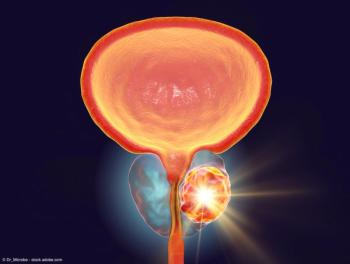
“One reason [the role of radiation has expanded] is the accuracy and precision of treatment, irrespective of a patient’s mutational profile. Radiation, irrespective of that heterogeneity and those mutations, has a high probability of killing those cancer cells,” said Daniel Spratt, MD.
"Urologists can play a central role in helping women through the symptoms that are associated with hormone issues," says Sarah K. Girardi, MD, FACS.

"We're all going through the same thing, so we should not be reinventing the wheel," says Dr. Kari Bailey.

"In Arkansas, for example, we now have half the urologists that there were 25 years ago, and that's with an increasing population. That's a representation of what's going on across the country," says R. Jonathan Henderson, MD.
“It certainly seems that we're moving into medical management of advanced diseases,” says J. Christopher Webster, MD, FACS.
“From a patient care standpoint, anything that opens the door and makes the patient feel more secure and open is going to lead to better outcomes for them and allow us to serve their needs best,” says Benjamin Lowentritt, MD, FACS.
“New imaging has rapidly changed the advanced prostate cancer landscape, and all of the existing studies that we have are based on older imaging,” says Dr. Henderson.

"In a phase 2 clinical trial, we saw that erdafitinib had an objective response rate of around 40% in patients who received prior chemotherapy for their metastatic disease," says Dr. Siefker-Radtke.
“From just a regular business sense, we can’t raise prices to offset some of our supply cost problems,” says David Morris, MD.

"There's 3000 patient trials that are either done or going to be done within the next year or 2 in the BCG-naïve setting, and all of them have systemic therapy," says Joshua J. Meeks, MD, PhD.
"People are starting to retire, and there isn't that much production of urologists every year; there's about 270 that come out for the whole country," says Richard Harris, MD.

"We want to make sure that independent urology continues to thrive by recruiting new people to independent urology. That's what we're going to try and do," said Evan R. Goldfischer, MD.

"Specifically for our transgender and gender-diverse patients, there are still insurance issues and access issues in general," said Diana K. Bowen, MD.

For patients with mCRPC who experience disease progression on novel hormonal agents (NHAs) and androgen deprivation therapy, it is important to consider when the NHA was received and whether docetaxel has been administered, explains Evan Y. Yu, MD.

ADT intensification through doublet and triplet regimens has become standard for most patients with metastatic castration-sensitive prostate cancer, Alicia Morgans, MD, MPH, explained in a presentation at the 2022 LUGPA Annual Meeting.
"We have more younger members here at the annual meeting than we've ever had before. We want to make that a priority," says Evan R. Goldfischer, MD, MBA, FACS.

In an interview during the 2022 LUGPA Annual Meeting, Jason M. Hafron, MD, shared advice on optimizing advanced prostate cancer clinics, recapped the biggest advances in urologic cancer treatment in 2022, and discussed how Jelmyto treatment for UTUC has evolved over time.
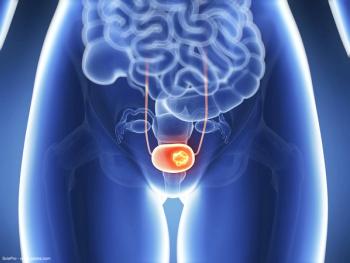
"It really is a fun time to be doing urothelial cancer research, as we see patients living longer, with more durable responses, impacting their overall survival and long-term outcomes," says Arlene Siefker-Radtke, MD.

“Don't make assumptions about any patients,” says Diana K. Bowen, MD.

Webster also shares his advice for young urologists entering community practice.
"We're seeing that it's beneficial to the patient—it’s easier, they don't require a general anesthetic, and we don't have to bring him to the hospital," says Dr. Hafron.

“The bar is high; we want to be curing these patients, not just delaying a recurrence of their cancer,” says Arlene O. Siefker-Radtke, MD.