
Ronney Abaza, MD, predicts the transformative impact that AI will have in robotic surgery.
Ronney Abaza, MD, predicts the transformative impact that AI will have in robotic surgery.

In determining the best treatment, urologist Arpeet Shah, MD, stresses the importance of thorough diagnostics.

Brooke Edwards, MD, highlights key takeaways from her LUGPA 2025 session, "Transforming your ASC."
Looking forward, Meeks said he sees nadofaragene firadenovec as a promising addition to the NMIBC treatment landscape.
Martin M. Miner, MD, highlights key findings from TRAVERSE and the T4DM study.
An expert discusses how proactive referral, multidisciplinary coordination, and early identification can optimize outcomes for patients with muscle-invasive bladder cancer, especially those with high-risk T2N0 disease.
Suzanne Merrill, MD, outlines recent progress with immunotherapy across NMIBC and MIBC.

LUGPA president Scott B. Sellinger, MD, FACS, highlights the key priorities and sessions at this year's LUGPA Annual Meeting.

This segment centers on the landmark EMBARK trial, which demonstrated a significant overall survival benefit with enzalutamide plus leuprolide. Freedland discusses the clinical implications of these findings, how they may alter treatment guidelines, and the importance of counseling asymptomatic patients about the benefits of early systemic therapy.
Data suggest that KIM-1 is prognostic for clinical outcomes in aRCC.
Liu notes that current data—showing a response rate of just over 50%—indicate that the BCG-unresponsive CIS cohort is the most appropriate initial target population.
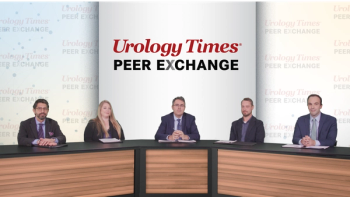
Panelists discuss how biomarker and molecular testing inform long-term planning in mCSPC, guiding future therapeutic sequencing and improving precision in patient management.
Panelists discuss how understanding pharmacologic and mechanistic distinctions among androgen receptor pathway inhibitors helps clinicians tailor therapy selection and patient monitoring.


212Pb-ADVC001 is a PSMA-targeted alpha-emitting radioligand therapy.

Panelists discuss how IsoPSA shows promise for equitable diagnostic performance but requires ongoing evaluation to ensure benefits reach all populations.
Panelists discuss how provider education and system-level support are vital for overcoming adoption barriers and ensuring IsoPSA is effectively used in practice.

This section explores how subcutaneous delivery can improve patient satisfaction, adherence, and quality of life through reduced treatment times and greater convenience.
Bertrand Tombal, MD, PhD, shares insights from the real-world REASSURE trial.
An expert discusses how the KEYNOTE-905 trial findings established pembrolizumab as a groundbreaking perioperative immunotherapy approach for cisplatin-ineligible muscle-invasive bladder cancer, significantly improving survival outcomes and redefining curative treatment strategies.
Petros Grivas, MD, PhD, touches on the signficance of KEYNOTE-905 data, which were presented at ESMO 2025.

Monique Roobol, PhD, MSc, noted that approximately half of the 30% higher incidence of prostate cancer in the screened arm represents overdiagnosis, primarily of low-risk cancers.

Aleece Fosnight, MSPAS, PA-C, encouraged urologists to normalize the conversation by openly acknowledging that these discussions can feel embarrassing but also by celebrating patients for taking the first step.
Freedland explores how enzalutamide’s role has expanded from advanced settings to earlier use in high-risk, biochemically recurrent prostate cancer. He discusses the clinical rationale for early initiation, particularly for urologists less familiar with systemic therapy, and compares enzalutamide with other androgen receptor pathway inhibitors in this population.
Rahul Aggarwal, MD, highlights final results from the phase 3 PRESTO trial in biochemically relapsed prostate cancer.
Qian Qin, MD, outlines the background and design of the phase 2 EXPLORE-RCC trial.
Petros Grivas, MD, PhD, highlights notable trial readouts across NMIBC, MIBC, and urothelial carcinoma.
Panelists discuss how understanding pharmacologic and mechanistic distinctions among androgen receptor pathway inhibitors helps clinicians tailor therapy selection and patient monitoring.
Panelists discuss how advances in systemic therapy have reshaped the treatment landscape for mCSPC, enabling more individualized and proactive first-line care.

Preliminary data from the study are promising.