





Next-Generation Imaging
Latest News
Advertisement
Latest Videos






CME Content



Advertisement
More News

US and Chinese companies are partnering to bring the PSMA-PET imaging agent flotufolastat F 18 to the armamentarium for patients with prostate cancer in China.

Overall, 43.3% of patients who had received a diagnosis of NMIBC had 1 or more additional lesions detected with APL-1706 plus BLC compared with WLC alone.

A recently published study compared bone scan with PSMA-PET for initial staging of prostate cancer.

"This is a whole other approach to treating patients with this cancer. If you think about that from the perspective of prostate cancer as a whole, this is a big deal," says Thomas A. Hope, MD.

"We had very high specificities. The specificities amongst the 3 readers ranged from 92% to 96%," says Phillip H. Kuo, MD, PhD, FACR.

"Overall, we found that there was a high detection rate in patients with PSA less than 1 ng/mL," says Ashesh B. Jani, MD, MSEE, FASTRO.

"Results showed that more than two-thirds of these men were found to have positive Posluma scans, with a quarter of them having extrapelvic lesions," says Ashesh B. Jani, MD, MSEE, FASTRO.

The phase 1/2 COMBAT study examining the novel theranostic 64Cu/67Cu-SAR-Bombesin.

"We'll have to obviously amend this document quickly as these drugs move earlier in the stage of disease," says Thomas A. Hope, MD.
"The reported bpMRI-based AI model detected the majority of locally recurrent prostate cancer after radiotherapy," the authors wrote in their study conclusion.

“Implementation of the most recent PI-RADS update did not improve the incongruence in prostate cancer grade assessment between MRI/ultrasound fusion targeted biopsy and surgery,” the authors wrote.

The reimbursement code for flotufolastat F 18 will be effective October 1, 2023.
An exclusive Urology Times survey measured US-based urologists’ uptake, access to, and indications for utilizing prostate-specific membrane antigen-targeting agents.

The radionuclide-drug conjugate 225Ac-J591 combines J591, a monoclonal antibody that recognizes PSMA, with actinium-225, a potent alpha emitter.
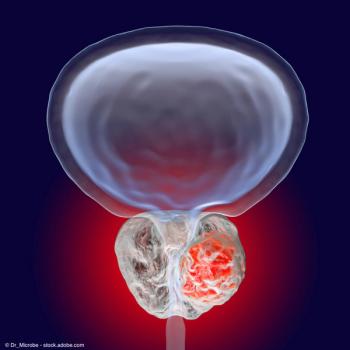
The incorporation of PSMA PET–imaging into a multivariate model enhanced the predictive accuracy for clinically significant prostate cancer in patients in the "PSA gray zone" of 4 to 10 ng/mL.
“We are pleased with the results we have generated in the BOP trial, which have shown that 64Cu SAR-Bombesin can detect lesions in men with biochemically recurrent prostate cancer that are negative or equivocal on PSMA PET,” said Louise Emmett, MBChB, FRACP, MD.

The Society of Nuclear Medicine and Molecular Imaging announced a consensus statement on patient selection and appropriate use of the radionuclide therapy 177Lu-PSMA-617 in patients with prostate cancer.
Cohort 3 of the SECuRE trial is exploring the safety and efficacy of a single-dose administration of 12GBq 67Cu SAR-bisPSMA in patients with metastatic castrate-resistant prostate cancer.

"We found that urology practices increasingly using mpMRI, and tissue-based genomics to a lesser extent, are more likely to treat men who have a high risk of non-cancer mortality. These men have the least to gain from treatment and are likely being overtreated,” says Kassem S. Faraj, MD, MS.

Use of non-contrast MRI also showed the potential to decrease identification of clinically insignificant disease.

The prospective, open-label, phase 2 SOLAR study enrolled 26 patients with metastatic prostate cancer.
“The results of the current study indicate that 100% of the elderly patients who were referred for PSMA PET/CT on the basis of clinical suspicion only were found to have avid disease," said Einat Even-Sapir, MD, PhD.

The SECURE trial exploring 64Cu/67Cu SAR-bisPSMA in patients with metastatic castration-resistant prostate cancer has advanced to the highest dose level.
A recent study suggests that combined use of ultrasound and multiparametric MRI-targeted biopsy with systematic biopsy may be more effective for detecting clinically significant prostate cancers than using systematic biopsies alone
"In patients with prostate cancer considered for surgery, PSMA-PET can provide information on the risk of recurrence after surgery, before the surgery even happens," says Loïc Djaïleb, MD, PhD.
Advertisement
Advertisement
Trending on Urology Times
1
CHMP recommends perioperative enfortumab vedotin plus pembrolizumab for MIBC
2
FDA grants RMAT designation to EG110A for neurogenic detrusor overactivity
3
FAQs: The 2026 AUA Guideline on Medical Management of Kidney Stones
4
Topical sildenafil cream associated with lower systemic exposure vs oral sildenafil
5