

Next-Generation Imaging
Latest News

ZIRCON study of TLX250-CDx confirms imaging agent’s potential in renal cell carcinoma
Advertisement
Latest Videos







CME Content



Advertisement
More News
“What we need now are biomarkers to know if the medication is going to work or not,” says Park.
The deep learning software also showed no difference in the consistency of scoring with the Prostate Imaging-Reporting and Data System (PI-RADS).

"Where it's feasible and where the patients are eligible, I and others are trying to use alternative therapies, which have probably a similar impact in terms of improving longevity of life for patients [with prostate cancer]," says Praful Ravi, MD, BChir, MRCP.

"Some of these patients newly referred don't have any other proven therapies remaining...This is the only one on the shelf that has a proven benefit. Unfortunately, we can't offer them that at this stage," says Praful Ravi, MD, BChir, MRCP.
The PSMA-targeted monoclonal antibody J591 is effective in non-metastatic CRPC when it is radiolabeled with either 177Lu or 111In.
Antibody-drug conjugates, including those targeting PSMA, are among the next wave of treatment advances in mCRPC.

The PSMA-PET imaging product is now approved for the selection of patients with metastatic prostate cancer for whom 177Lu-PSMA-617 is indicated.

Once patients had a PSA level of 0.25 ng/mL or higher, the risk of mortality increased by approximately 50%.

The phase 1 PROPELLER trial assessed the safety and efficacy of 64Cu-SAR-bisPSMA, and compared the imaging agent with 68Ga-PSMA-11 PET.
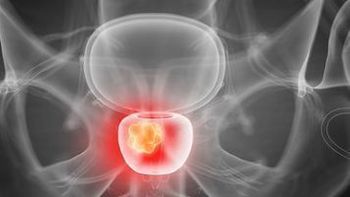
The data come from a sub-analysis of the pivotal phase 3 CONDOR trial of the PSMA-targeted radiopharmaceutical piflufolastat F 18 in men with suspected recurrence of prostate cancer.

“I clearly think that this agent improves the identification of clear cell kidney cancer compared with any metric on any cross-sectional imaging study to date," says Brian M. Shuch, MD.

Overall survival outcomes were similar to those treated with 177Lu-PSMA-617 more than 6 months after radium-223 treatment, according to findings from the RALU study.
"We are very pleased to have reached our recruitment target for the COBRA trial. The data generated thus far on the SAR-bisPSMA product is very encouraging and shows high uptake of the agent by prostate cancer cells,” said Neal Shore, MD.

Benjamin Lowentritt, MD, discusses how the phase 3 SPOTLIGHT trial showed the efficacy of the PSMA-PET imaging agent 18F-rhPSMA-7.3 PET across a variety of subgroups in prostate cancer.
“This study is one of the most highly anticipated of all of the metastatic hormone-sensitive setting trials that we have going on at this time,” says Alicia Morgans, MD, MPH.
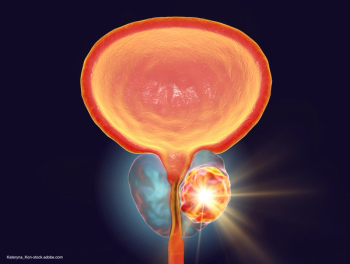
MRI-guided SBRT reduced both acute toxicity effects and decrements in quality-of-life measures when compared with CT-guided SBRT, according to findings published in JAMA Oncology.
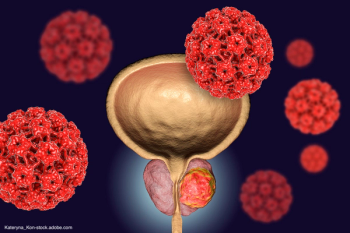
“There are a slew of ongoing trials looking at 177Lu-PSMA-617 in earlier stages of disease,” says Praful Ravi, MB, BChir, MRCP.
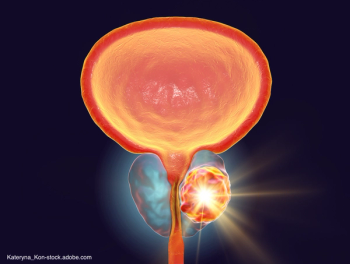
“We have to remember that this is not a cure for prostate cancer…right now, it is another tool in the toolbox,” says Praful Ravi, MB, BChir, MRCP.
The SPLASH trial is examining PNT2002 in patients whose tumors express PSMA and who have experienced disease progression on an androgen receptor axis–targeted therapy.

As the year comes to a close, we revisit some of this year’s top content on next-generation imaging.
Press Release
“We now have convincing evidence that these tests help identify more sites of prostate cancer," said Michael Leapman, MD.

Using MRI-directed targeted biopsy instead of systematic biopsy for screening and early detection in patients with an elevated PSA lowered the risk of overdiagnosis by half.
64Cu-SAR-bisPSMA was, “safe, well tolerated, and efficacious in detecting primary prostate cancer,” according to developer Clarity Pharmaceuticals.

“In terms of both numbers of centers [administering radionuclides] as well as the amount of drug that’s available, [both] are going to increase over the next several months and certainly, year,” says Scott T. Tagawa, MD, MS, FACP.
177Lu-PSMA-617 is approved for the treatment of patients with PSMA-positive metastatic castration-resistant prostate cancer in the post androgen receptor pathway inhibition, post taxane-based chemotherapy setting.
Advertisement
Advertisement
Trending on Urology Times
1
CHMP recommends perioperative enfortumab vedotin plus pembrolizumab for MIBC
2
FDA grants RMAT designation to EG110A for neurogenic detrusor overactivity
3
FAQs: The 2026 AUA Guideline on Medical Management of Kidney Stones
4
Topical sildenafil cream associated with lower systemic exposure vs oral sildenafil
5