







TLX591-CDx (Illuccix) is a radiopharmaceutical cold kit for the preparation of gallium-68 PSMA-11 injection.
TLX591-CDx (Illuccix) is a radiopharmaceutical cold kit for the preparation of gallium-68 PSMA-11 injection.

“I believe we are getting to an era where we will be able to cure a significant subset of patients who we are not able to cure today,” says Neil H. Bander, MD.

The PROPELLER trial is exploring the novel PSMA-PET imaging product 64Cu-SAR-bisPSMA in patients with treatment-naïve, histologically confirmed prostate cancer who are scheduled for radical prostatectomy.

In a recent interview, Neil H. Bander, MD, emphasizes some of the specific innovations that are on the horizon for PSMA.
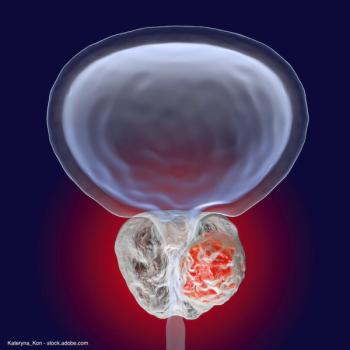
"This is a way for us to get high doses of radiation to sites of tumors," says Michael S. Hofman, MBBS (Hons), FAANMS, FICIS.
“Our preclinical therapy models all show us that the combination of the 2 agents [alpha and beta particles] is substantially superior to either agent alone,” says Neil H. Bander, MD.

“There's a hope that we can modulate PSMA expression with some drugs, increase the amount of PSMA on the tumors, [and] therefore increase the amount of radiation that we can target,” says Michael S. Hofman, MBBS (Hons), FRACP, FAANMS, FICIS.
“It's very clear that PSMA-PET imaging is having…a transformative impact on our ability to image metastatic disease, in that it is much more sensitive than we've had for the last 50 plus years—and also, 98% specific,” says Neil H. Bander, MD.
“We hope to further investigate next-generation PSMA-targeting molecules, develop new biomarkers to try to predict and monitor response to these novel therapies, optimize combinations with other treatments, and do some discovery research, including artificial intelligence [and] deep learning of our images,” says Michael S. Hofman, MBBS (Hons), FRACP, FAANMS, FICIS.
“We expect an outcome from the FDA next year and if that's positive, we expect global, widespread availability of this as a new option for men with metastatic castration-resistant prostate cancer,” says Michael S. Hofman, MBBS (Hons), FRACP, FAANMS, FICIS.

The SECURE trial is exploring the PSMA PET imaging product 64Cu-SAR-bisPSMA and the PSMA targeted therapy 67Cu-SAR-bisPSMA.

The oncology provider will enable patient access to the PSMA-PET imaging agent piflufolastat F 18, which the FDA approved in May 2021 for identifying suspected metastasis or recurrence of prostate cancer.
"Combining mpMRI and 68Ga-PSMA PET/CT in a primary diagnostic setting could better identify where to target on biopsy, increasing the diagnostic yield, improving concordance with underlying tumor grade and therefore improving management recommendations," the authors wrote.

In the majority of patients, the study findings resulted in impactful changes to clinical management.
The nomogram was significantly prognostic of key clinical end points and achieved outcomes comparable to STAR-CAP and superior to other established risk-stratification tools.
“This zone-dependent biopsy strategy warrants prospective evaluation to optimize the extent of systematic biopsies in presence of suspicious mpMRI lesions,” the authors wrote.

"Clinicians taking care of patients with high-risk prostate cancer being assessed for prostatectomy can use a positive [PSMA] PET scan as a true positive, whereas a negative scan cannot be used to exclude disease or inform nodal dissection," wrote Joseph Osborne, MD, PhD, and colleagues.
The designation, which will expedite the regulatory review of LuPSMA in this setting, is primarily based on findings from the phase 3 VISION trial.

The phase 3 SPLASH trial is exploring the novel PSMA-targeted therapy PNT2002 in patients with metastatic castration-resistant prostate cancer and progressive disease.
The PET radiopharmaceutical led to a shift in the management of nearly two-thirds of men with biochemical recurrence of prostate cancer.

"This is the first time that I have seen such impressive responses with an immunotherapy product. The responses of my patients in the trial are far beyond my expectations," said study investigator Susan F. Slovin, MD, PhD.
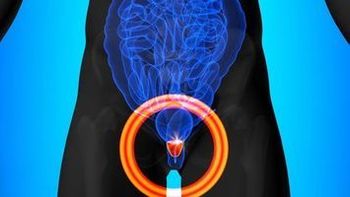
The theranostic 64/67Cu SAR-bisPSMA combines the PSMA PET imaging product 64Cu-SAR-bisPSMA and the PSMA targeted therapy 67Cu-SAR-bisPSMA.
Susan F. Slovin, MD, PhD, highlights 177Lu-PSMA-617 and the radiopharmaceutical revolution in metastatic castration-resistant prostate cancer.
Preclinical data have provided further evidence that adding the novel radiosensitizer idronoxil to 177Lu-PSMA-617 may improve survival in patients with metastatic castration-resistant prostate cancer.

“Targeted ligand therapy is extremely exciting,” says Ketan K. Badani, MD.