




Next-Generation Imaging
Latest News

Advertisement
Latest Videos





CME Content



Advertisement
More News

Researchers may be able to use imaging mass cytometry to capture and classify the tumor-immune evasion cell networks in clear cell renal cell carcinoma.
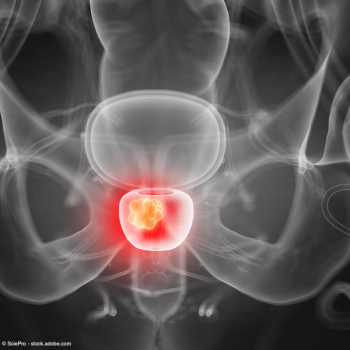
Analysis shows MRI is comparable to post-surgery pathologic staging for assessing risk of biochemical recurrence.
“I think the prostate cancer community has benefited a lot in the past several years with the advent of enhanced imaging tools to help us better stage patients with prostate cancer both at their initial diagnosis and if, unfortunately, they have a recurrence,” says Edward M. Schaeffer, MD, PhD.
The study will assess the ability of Cu-64 SAR-bisPSMA to detect prostate cancer within the pelvic lymph nodes.

"The high reproducibility of reader results across all regions is clinically valuable, with the potential to influence patient management prior to surgery for patients with newly diagnosed disease," says Phillip H. Kuo, MD, PhD.
"Personalized dosing allowed one-third of the men in this study to have treatment breaks while still achieving the same progression-free and overall survival outcomes they would have if they received continuous treatment," says Andrew Nguyen, MBBS, FRACP, AANMS.

"I think one of the key things is when we look at things like sensitivity and specificity, sensitivity is very much reliant on the incidence of a disease or the state of the disease," says Brian F. Chapin, MD.
“Our results support the notion that mpMRI is an inadequate screening tool for locally advanced [prostate cancer] and should not be used as the sole means of presurgical [prostate cancer] staging," wrote the authors.

The AI model was accurate and effective in an independent test set, according to the study authors.
Flotufolastat F 18 was granted FDA approval on May 25, 2023 based on data from the phase 3 SPOTLIGHT and LIGHTHOUSE trials.
"We're excited that the FDA approval of this radiotracer gives us yet more tools at our disposal to diagnose prostate cancer in all its forms, from early to late in the disease process," says David M. Schuster, MD, FACR.
The theranostic 64Cu/67Cu-SAR-BBN combines the imaging product 64Cu-SAR-BBN and the targeted therapy 67Cu-SAR-BBN.

“It's very helpful when we're looking at how we counsel patients about the stage of their disease,” says Brian F. Chapin, MD.
Pelvic lymph node involvement and polymetastases detected with PSMA-PET imaging were linked to significantly lower overall survival rates in patients initially diagnosed with non-metastatic, castration-resistant prostate based on conventional imaging.

“I think the importance of this is that these are more accurate than our current imaging studies in helping us to better counsel patients on the expected treatment options given their current situation,” says Brian F. Chapin, MD.

“Obviously it's important to have options when we're looking at the various tracers that we're using for evaluation of patients with prostate cancer,” says Brian F. Chapin, MD.

The approval of flotufolastat F 18 (formerly 18F-rhPSMA-7.3) in prostate cancer is based on findings from the phase 3 SPOTLIGHT and LIGHTHOUSE trials.

“PSMA-PET technology is helping urologists think about how to individualize a treatment plan for a patient based on what's discovered with this sensitive imaging modality,” says Christopher W. Ryan, MD.
The theranostic 64Cu/67Cu SAR-bisPSMA yielded positive safety and efficacy signals in patients with metastatic castration-resistant prostate cancer.

“PSMA-PET imaging gives us a more nuanced approach by giving us more accurate information,” says Jen-Jane Liu, MD.

Jen-Jane Liu, MD, discusses how PSMA-PET imaging might help physicians decide whether or not a patient with prostate cancer needs lymph node dissection.

Researchers examined the impact of deep learning–based AI software upon radiologists reviewing multiparametric MRI scans in the assessment of clinically significant prostate cancer.
In the ARASTEP trial, the primary outcome measure of rPFS is being measured by PSMA-PET/CT imaging with 68Ga-PSMA-11 (prepared using Illuccix) or piflufolastat F 18.
Illuccix is approved by Health Canada for imaging in patients with suspected metastasis who are candidates for initial definitive therapy, or in patients with suspected recurrence based on an elevated PSA level.
The designation is for patients with mCRPC who have progressed on an androgen receptor pathway inhibitor and are not eligible for or decline to receive chemotherapy.
Advertisement
Advertisement
Trending on Urology Times
1
CHMP recommends perioperative enfortumab vedotin plus pembrolizumab for MIBC
2
FDA grants RMAT designation to EG110A for neurogenic detrusor overactivity
3
FAQs: The 2026 AUA Guideline on Medical Management of Kidney Stones
4
Topical sildenafil cream associated with lower systemic exposure vs oral sildenafil
5