

Singh concludes that increasing physician awareness and comfort with low-dose imaging is key to reducing unnecessary radiation while maintaining diagnostic accuracy and patient safety.
Singh concludes that increasing physician awareness and comfort with low-dose imaging is key to reducing unnecessary radiation while maintaining diagnostic accuracy and patient safety.
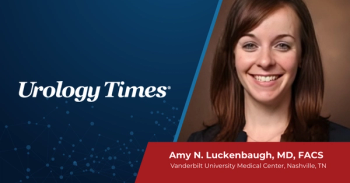
Amy Luckenbaugh, MD, FACS, outlines the ways that SWIU supports women across all stages of their urologic careers and the ways women can become involved with the organization.
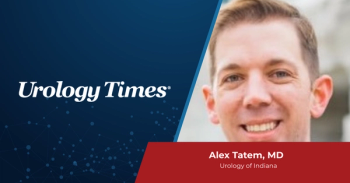
Alex Tatem, MD, explains that hyaluronic acid penile injections add temporary, measurable girth by safely distributing a reversible filler within soft tissue, though outcomes depend heavily on technique and vary between individuals.

Savannah Grandy, DO, highlights key takeaways from a MUSIC-KIDNEY study comparing single port vs. multiport robotic partial nephrectomy.

Kristen R. Scarpato, MD, MPH, recaps a panel discussion at SWIU 2026 focused on imposter syndrome.

Angela B. Smith, MD, MS, discusses the guiding priorities behind shaping this year’s Society of Women in Urology annual meeting.

Healthcare professionals discuss strategies to manage cardiovascular risks in cancer patients, emphasizing weight control, exercise, and collaboration with primary care.
Healthcare professionals discuss the importance of addressing quality of life and exercise for patients starting androgen deprivation therapy.
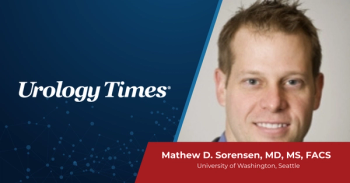
Because Break Wave uses lower pressure levels, patient discomfort is minimal, allowing treatments to be performed without sedation.

Francisco Ramos, MD, highlights a study examining the impact of socioeconomic hardship on cancer presentation and survival in testicular cancer.
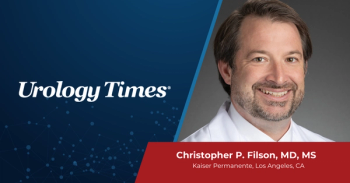
Christopher P. Filson, MD, MS, highlights a study evaluating the real-world utility of incorporating the CxBladder Triage test to the diagnostic workflow for microhematuria.

To address high no-show rates typical of safety-net settings, JPS implemented proactive scheduling practices.

Sarah Azari, MD, highlights a prospective study examining the impact of perioperative education on demoralization and sexual function in women with bladder cancer.

Veda N. Giri, MD, outlines practical ways to improve prostate cancer genetic testing uptake and impact.
Amy N. Luckenbaugh, MD, FACS, shares what her patients have taught her about resilience as well as some of the advances in urologic oncology that are giving her hope.
Recent trends show a significant increase in the use of combination therapies for advanced cancer, highlighting the need for ongoing education and adaptation.
Experts discuss the complexities of advanced imaging in cancer diagnosis, highlighting challenges with PET scans and the importance of accurate interpretation.

Kate Kraft, MD, MHPE, FACS, FAAP, discusses her SWIU 2026 session on helping early-career urologists find their “leadership flow.”
Break Wave lithotripsy uses low-pressure, repeated pulses that generate standing stress waves within the stone.
Kristen R. Scarpato, MD, MPH, discusses what level of evidence is necessary to shift the standard of care in BCG-naive NMIBC.

Amanda C. North, MD, reflects on key takeaways from a panel discussion on imposter syndrome.

Farah Rahman, MD, MPH, highlights a pilot study on the use of wearable biofeedback technology to better understand and address burnout among urology residents.

Regarding acceptable risk thresholds, Alam describes himself as relatively risk-averse, favoring a 5% to 10% miss rate for Grade Group 2 or higher disease when considering biopsy avoidance.
John P. Sfakianos, MD, shares the clinical rationale for the phase 2 ENHANCE trial, evaluating the addition of NKG2A inhibition to PD-1/PD-L1 inhibition in NMIBC.

Aleece Fosnight, MSPAS, PA-C, highlights the importance of tailoring contraceptive choice to symptom patterns.
Veda N. Giri, MD, shares key findings from the PROGRESS Registry, which evaluated patient-reported outcomes with prostate cancer genetic testing.
In this episode, ‘Strategic Use of ADT in mCSPC From Selection to Escalation,’ the multidisciplinary panelists explore the following questions: With multiple generations of ADT now available in advanced prostate cancer, including oral and injectable options, how do you determine which patients are appropriate candidates for which formulation of ADT? When selecting ADT as the backbone for doublet therapy in metastatic castration-sensitive prostate cancer (mCSPC), in which patients do you prefer the oral versus the injectable option? Which androgen receptor pathway inhibitor (ARPI) do you initiate first? Please explain your rationale. In mCSPC, how do you decide when to escalate from ADT–ARPI doublet to triplet therapy, and what patient or disease factors most influence that decision? How do you weigh potential benefits against added toxicity and contraindications? How does cumulative toxicity influence your willingness to escalate therapy or modify treatment plans?
Welcome back to another Urology Times Peer Exchange series. In this episode titled, ‘Treatment Selection in Advanced Prostate Cancer’, Drs. Paul Sieber, Alicia Morgans, Neeraj Agarwal, and Chad Ritch discussed the following question: When developing treatment plans for prostate cancer, what factors influence treatment selection?

Discover essential insights for managing metastatic prostate cancer, including the importance of clinical trials and early genetic testing.

Pedro F.S. Freitas, MD, recaps his talk at the 2026 Desai Sethi Urology Institute Urology on the Beach meeting.