
Sudha Jayaraman, MD, MSc, FACS, recaps a session from the 2026 Urology on the Beach meeting focused on AI in health care.
Sudha Jayaraman, MD, MSc, FACS, recaps a session from the 2026 Urology on the Beach meeting focused on AI in health care.
Although BCG has been the standard of care for decades and remains the most effective available treatment, outcomes remain suboptimal for many patients.

Lina Posada Calderon, MD, discusses the background and key takeaways from her team’s study examining germline BAP1-associated renal cell carcinoma.
Alam frames PHI and MRI as noninvasive tools that help refine risk before proceeding to biopsy.

Despite improvements, Kalyani Narra, MD, highlights persistent gaps in referral among eligible patients.
John P. Sfakianos, MD, outlines the scientific rationale for combining systemic immunotherapy with BCG in the BCG-naïve NMIBC setting.
Wesley Hauwei Chou, MD, outlined 2 projects evaluating potential biomarkers for treatment response in renal cell carcinoma.

When symptoms appear tied to the menstrual cycle, pharmacologic options can be used as short-term support.

Explore the complexities of treatment protocols for metastatic hormone-sensitive patients, focusing on therapy cessation and re-initiation strategies.
Affordability and Accessibility of Therapies in mCSPC Care
Iman Sadri, MD, CM, discusses a somatic-autonomic nerve grafting technique for patients with persistent erectile dysfunction after radical prostatectomy.
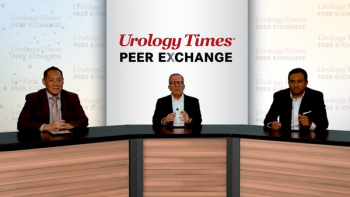
The expert faculty discusses how to approach management for patients who experience NMIBC recurrence after receiving combination BCG and checkpoint inhibitor therapy.
The session emphasized how rapidly evolving AI technologies are addressing long-standing inefficiencies in urologic care.
Walter R. Hsiang, MD, MBA, highlights a study looking at access to care, insurance acceptance, wait times, and costs for stone disease management.
Aleece Fosnight, MSPAS, PA-C, highlights pattern recognition as a cornerstone of diagnosis, encouraging clinicians to closely examine how urinary symptoms fluctuate across the menstrual cycle.
A key finding was that among the qualities applicants highlighted, only “learning and growth” correlated with interview selection.
Maxwell L. Sandberg, MD, highlights a study on survival outcomes between patients who underwent CN-TT via an open, laparoscopic, or robotic approach.
Notable findings highlighted stark differences between this safety-net population and national averages.

Fed Ghali, MD, discusses the phase 2 CONSOLIdaTE-01 trial, assessing the role for consolidative local therapy following disease control on EV/P.

Jennifer Miles-Thomas, MD, URPS, MBA, emphasizes that teleurology and team-based care models offer significant promise
Mark D. Tyson, II, MD, MPH, highlights interim findings from the ADVANCED-2 trial of TARA-002 in BCG-naïve NMIBC.
Discover essential tips for new users on rectal spacers, including collaboration, training, and enhancing patient care in radiation oncology.
Experts discuss evolving treatment strategies for metastatic castration-resistant prostate cancer, emphasizing personalized therapy and innovative options.
Experts discuss evolving treatment strategies for metastatic castration-resistant prostate cancer, emphasizing personalized therapy and innovative options.
Patients learn about the benefits of rectal spacers in radiation therapy, easing concerns and enhancing treatment comfort and safety.
The study retrospectively analyzed 456 biopsy-naive men who underwent PHI testing followed by a prostate biopsy.
In the final installment in a 5-part series, Richard Wassersug, PhD, and Paul F. Schellhammer, MD, FACS, discuss strategies for establishing transdermal estradiol as a recognized therapy for men undergoing androgen deprivation therapy for prostate cancer.
In part 4 of a 5-part series, Richard Wassersug, PhD, and Paul F. Schellhammer, MD, FACS, focus on concerns about the adverse events of transdermal estradiol, particularly gynecomastia.
In part 3 of a 5-part series, Richard Wassersug, PhD, and Paul F. Schellhammer, MD, FACS, discuss emerging evidence supporting transdermal estradiol as an effective and potentially superior alternative to traditional LHRH analogue ADT for advanced prostate cancer.
In part 2 of a 5-part series, Richard Wassersug, PhD, and Paul F. Schellhammer, MD, FACS, explore the historical, clinical, and systemic barriers to using transdermal estradiol as a treatment for prostate cancer, while highlighting its potential benefits.