
In this opening segment, Richard Wassersug, PhD, and Paul F. Schellhammer, MD, FACS, discuss the origins, goals, and challenges of the Estradiol Initiative.
In this opening segment, Richard Wassersug, PhD, and Paul F. Schellhammer, MD, FACS, discuss the origins, goals, and challenges of the Estradiol Initiative.
The expert faculty discuss how to approach management for patients who experience NMIBC recurrence after receiving combination BCG and checkpoint inhibitor therapy.
The expert faculty explores complex clinical scenarios involving patients who progress to muscle-invasive bladder cancer (MIBC) after receiving prior immunotherapy for high-risk NMIBC.
Harras Zaid, MD, discusses the complex decision-making involved in managing renal tumors with associated tumor thrombus.

Tom Jayram, MD, discusses the phase 2 SURF302 trial of TYRA-300, a FGFR3-selective inhibitor for FGFR3-altered LG-IR-NMIBC.
Explore the evolving landscape of immunotherapy in prostate cancer, focusing on personalized treatments and innovative combination strategies.
Explore the evolving landscape of prostate cancer treatment, focusing on personalized immunotherapy and effective patient management strategies.

Fed Ghali, MD, highlights simulated outcomes of the EV-302 trial when adjusting for use of maintenance avelumab in the control arm.

One of the most notable changes is a new thematic structure within urologic oncology.
The study assessed descriptive sequencing and oncologic outcomes among patients receiving gene therapy for BCG-unresponsive NMIBC.
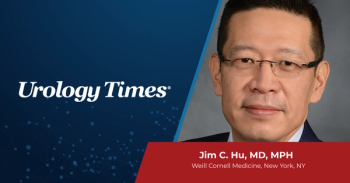
Jim C. Hu, MD, MPH, discusses the functional advantages of a posterior approach to endopelvic neurovascular total sparing (PATENTS) robotic-assisted radical prostatectomy.

Healthcare professionals discuss patient selection, treatment strategies, and compliance tools for managing advanced prostate cancer effectively.
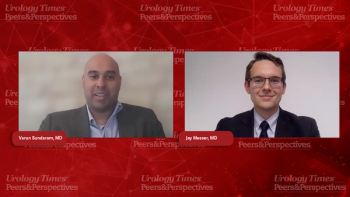
Explore the effectiveness of rectal spacers in reducing gastrointestinal toxicity and improving patient quality of life during cancer treatment.
Experts discuss the importance of genetic testing in managing aggressive prostate cancer, emphasizing early testing and actionable mutations for treatment decisions.
Rectal spacers significantly improve gastrointestinal toxicity and quality of life for patients undergoing cancer treatment, with lasting benefits.

Aleece Fosnight, MSPAS, PA-C, emphasizes that timing is one of the most valuable diagnostic clues.
The expert faculty emphasize the growing importance of multidisciplinary collaboration and workforce development as NMIBC management evolves to include systemic immunotherapies.
The expert faculty discuss practical and logistical considerations for integrating novel immunotherapies into clinical management of high-risk non–muscle-invasive bladder cancer (NMIBC).

John Michael DiBianco, MD, discusses the design of the ongoing SOUL trial, which is assessing stent omission vs stent placement following uncomplicated ureteroscopy.

Ilaha Isali, MD, MSc, identifies major unresolved gaps in sex-specific bladder cancer research.

Daniel Spratt, MD, discusses how the ArteraAI Prostate Test (Post-RP) could help guide treatment intensification decisions.

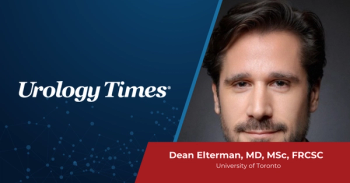
Dean Elterman, MD, MSc, FRCSC, attributes the 99% catheter-free discharge rate in the BREEZE study largely to appropriate patient selection.

Steven A. Kaplan, MD, frames the greatest value of ProVee not as competition with other procedures, but as a compelling alternative to chronic medical therapy.
Steven A. Kaplan, MD, emphasizes that ProVee is well suited for office-based or ambulatory settings and is designed to be performed under local anesthesia

Exogenous testosterone therapy and fertility are fundamentally incompatible.
Although the trial includes multiple tumor types, the presented data focus on RCC, predominantly clear cell disease.

Kevin C. Zorn, MD, FRCSC, FACS, outlines notable advances in the management of benign prostatic hyperplasia over the past year.
Experts discuss the importance and limitations of real-world evidence in assessing cardiovascular risks associated with ARPIs, emphasizing the need for critical analysis.
Experts discuss the importance of managing cardiovascular health and bone health in prostate cancer treatment, emphasizing real-world data and patient care strategies.