

The primary end point is overall survival, with secondary end points including PSA response metrics, progression measures, PSA kinetics, and several ctDNA assessments to help identify which patients benefit most.
The primary end point is overall survival, with secondary end points including PSA response metrics, progression measures, PSA kinetics, and several ctDNA assessments to help identify which patients benefit most.

Arvin K. George, MD, discusses the unique design of the VAPOR 2 trial as well as the key findings from the first 110 patients enrolled in the study.

Siamak Daneshmand, MD, emphasizes that, at present, optimal patient selection remains unclear because resistance mechanisms and predictive biomarkers are not yet well understood.

Explore the evolving landscape of prostate cancer treatments, focusing on efficacy, tolerability, and the nuances of various therapies.
Experts discuss the future of metastatic cancer treatment, focusing on risk stratification, personalized therapies, and the balance between intensification and de-escalation.

Mark D. Tyson, II, MD, MPH, recapped topline results from the BOND-003 trial of cretostimogene grenadenorepvec in papillary only BCG-unresponsive NMIBC.

For patients undergoing salvage surgery or radiation, Kelly L. Stratton, MD, FACS, notes that previous focal therapy can influence outcomes.

TULSA patients were treated and discharged the same day.

Laura Bukavina, MD, MPH, offered her thoughts on the significance of the KEYNOTE-905 data and highlighted some remaining questions surrounding the regimen.
Stratton emphasized that the trial’s results provide greater confidence in recommending therapy and allow clinicians to counsel patients more decisively about next steps when PSA begins to rise.

Michael S. Cookson, MD, MMHC, FACS, shares his thoughts on the most exciting recent advances in bladder cancer treatment.

Joshua J. Meeks, MD, PhD, discussed the emerging role of ctDNA in guiding adjuvant and neoadjuvant strategies in patients with bladder cancer.


Laser technology is expected to play a major role in the next wave of innovation.
Learn how suction has become central to contemporary ureteroscopic practice and how its integration is reshaping surgical decision-making, treatment algorithms, and the perceived role of percutaneous procedures.
Karen L. Stern, MD, and Naeem Bhojani, MD, FRCSC, outline the advantages of CVAC 2.0, particularly in cases involving larger stone burdens.
Experts compare and contrast direct in-scope suction with the flexible and navigable ureteric access sheath.
In this opening segment, the discussion focuses on the rapid evolution of kidney stone surgery and how suction has transitioned from an aspirational idea to a core component of modern ureteroscopy.

Panelists discuss how proactive education, regular follow-up, and multidisciplinary support improve adherence to oral ARPI therapy and drive better real-world outcomes in mCSPC.

The expert faculty analyze the recently presented ALBAN trial, a phase 3 study evaluating atezolizumab in combination with intravesical BCG versus BCG alone for BCG-naïve, high-risk non–muscle invasive bladder cancer (NMIBC).
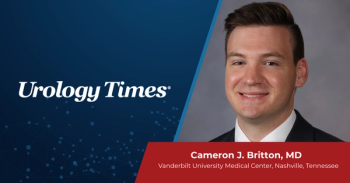
Cameron J. Britton, MD, highlights key findings from a study of the MyProstateScore 2.0 in predicting upgrading to GG≥3 prostate cancer.
The expert faculty discuss the expanding use of immune checkpoint inhibitors in high-risk non–muscle invasive bladder cancer (NMIBC), emphasizing how these agents are reshaping treatment delivery and safety monitoring.
Panelists discuss how promoting transparency, methodological rigor, and clinical relevance helps overcome skepticism around real-world evidence and strengthens its role in guiding mCSPC care.

Roger Li, MD, discusses the development and validation of a CHAI-based biomarker to identify patients with LG NMIBC who are at higher risk of progression.

INVITE is a 2-part clinical trial designed to evaluate the safety, feasibility, and patient experience of administering intravesical bladder cancer therapies in the home.
One notable trend is the shift of therapies originally reserved for heavily pretreated, castration-resistant prostate cancer into earlier phases of disease.

The ENLIGHTED trial is evaluating the safety and efficacy of padeliporfin vascular targeted photodynamic therapy for low-grade upper tract urothelial carcinoma.
The 510(k) clearance was supported by 12-month data from the VAPOR 2 trial, which were presented at the 2025 SUO Annual Meeting.

Sameena A. Rahman, MD, emphasizes that menopause care requires precision medicine rather than a one-size-fits-all approach.

Leila Momtazi-Mar notes that although some studies suggest a decline in retrieval rates after age 40, this association remains preliminary.